




Deburring
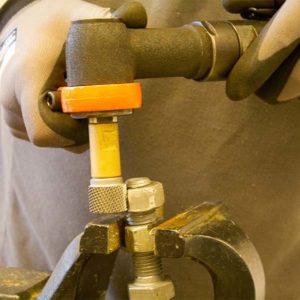
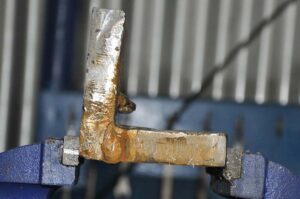
Remove the projecting burr left by cutting or drilling. Work locally along the cut and check the reverse side as well.
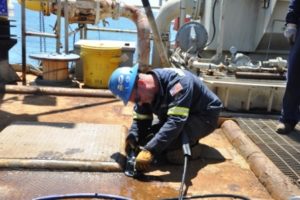
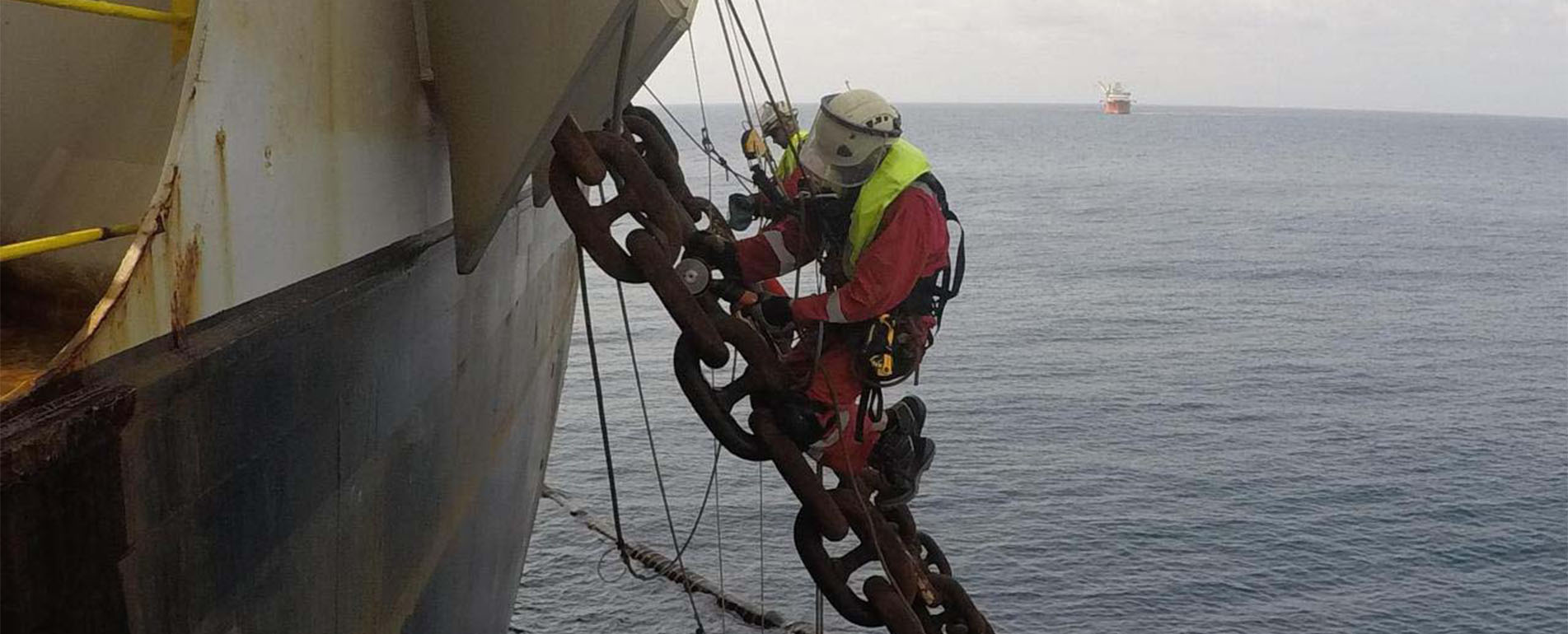
Remove cutting burrs and round sharp transitions on plates, handrails and hollow sections. Safety Tools Allmet’s rotating files provide direct access to edge work. We supply the file and air tool for your part, from local deburring to rounding before coating.

A cut edge can have projecting burrs, sharp corners and a geometry that needs changing before coating. Distinguishing the tasks helps you choose the right file and focus work on the material to be removed.
Remove the projecting burr left by cutting or drilling. Work locally along the cut and check the reverse side as well.
Dress a sharp transition on the part and address corners left after fabrication or repair.
Create a consistent curved transition along the edge included in preparation. Check its shape against the specified radius.
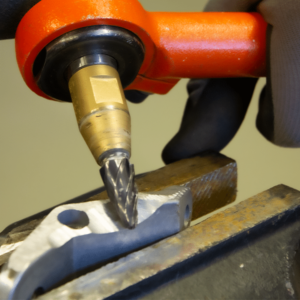
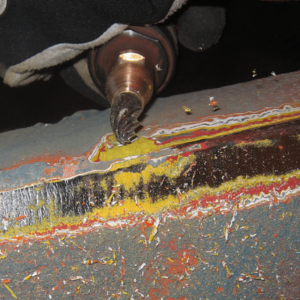
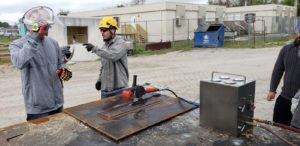
Two short working films show different access situations: around a hollow-section opening and along a plate edge beside a welded detail. Compare the geometry with your part and ask us to demonstrate the file on a similar edge.
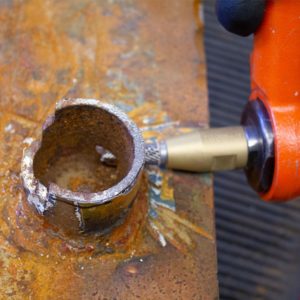
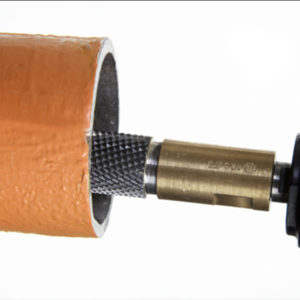
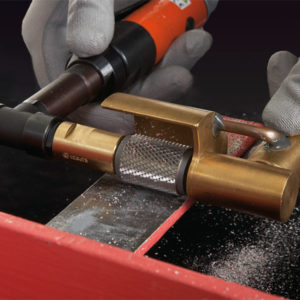
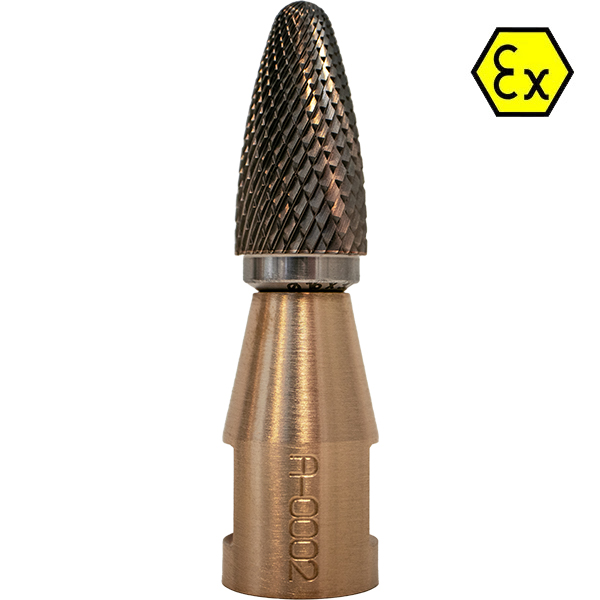
Straight Cone works along the edge around the opening of a rectangular hollow section. The close-up shows access to the cut edge and the transition towards the inside.
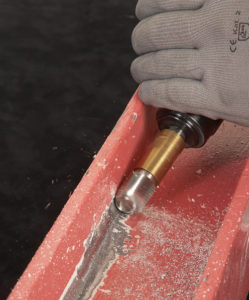
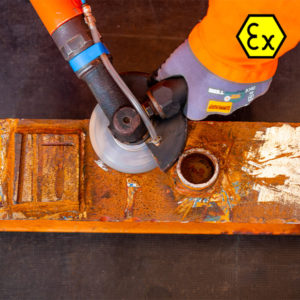
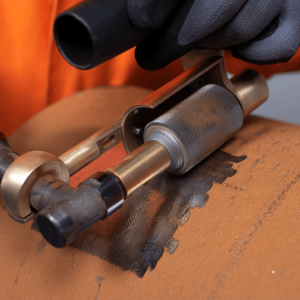
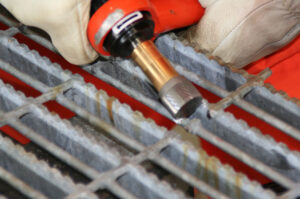
Bow Cone works on a plate edge beside a welded detail. Watch the file reaching along the edge and the transition to the adjacent surface.
After cutting, a burr can remain on the outside, inside or reverse side of the cut. This is particularly relevant to tube ends, square hollow sections, plate cut-outs and parts that will be handled or assembled. A suitable file shape lets you work where the burr is located.
Use the narrower portion of a conical file where clearance is limited and select a larger contact face on an accessible edge. On thin-walled parts, match material removal to the wall thickness and dimensions to be retained. We demonstrate the approach and file selection before you choose a setup.
Sharp steel edges can develop a thinner paint film than the adjacent faces. Preparation therefore includes the transition around the edge where required for coating. Round consistently along the full relevant length, including corners and terminations.
When a particular radius is specified, we select the file and working position for that task and demonstrate preparation on a sample. Use a suitable radius gauge to check the result. Plan edge rounding and stripe coating within the overall coating sequence.
Use the drawing or coating specification to establish the edge geometry. ISO 8501-3:2025 defines preparation grades for welds, edges and other areas with steel surface imperfections. The specification for the part determines the criteria to check.
A specific shipbuilding example: IMO MSC.215(82), Table 1, item 3.1, specifies rounding to at least a 2 mm radius, three-pass grinding or an at least equivalent process before painting. This example concerns the standard’s scope for dedicated seawater ballast tanks and specified double-side skin spaces in bulk carriers.
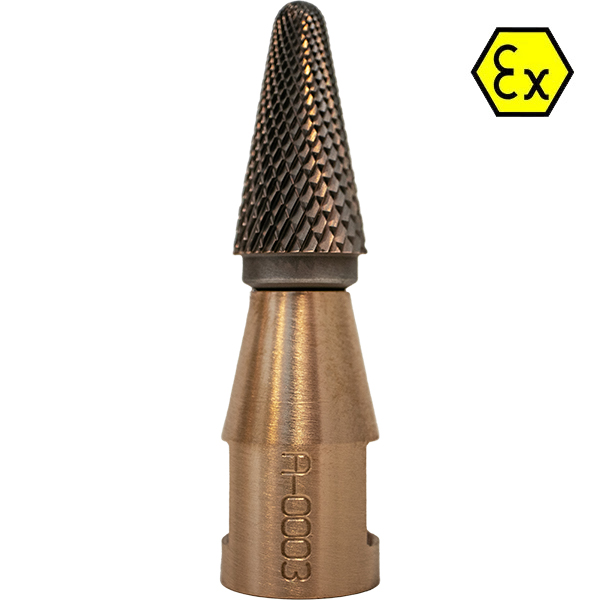
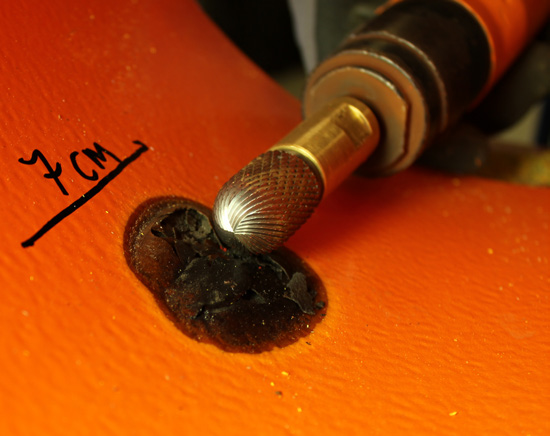
A relevant choice for cut edges, corners and transitions on hollow sections. The straight conical shape provides access at openings and angled details. See it working in the first film.
Choose this shape for confined areas and transitions beside details. The film shows work along a plate edge close to a welded connection. We assess the shape against your available clearance.
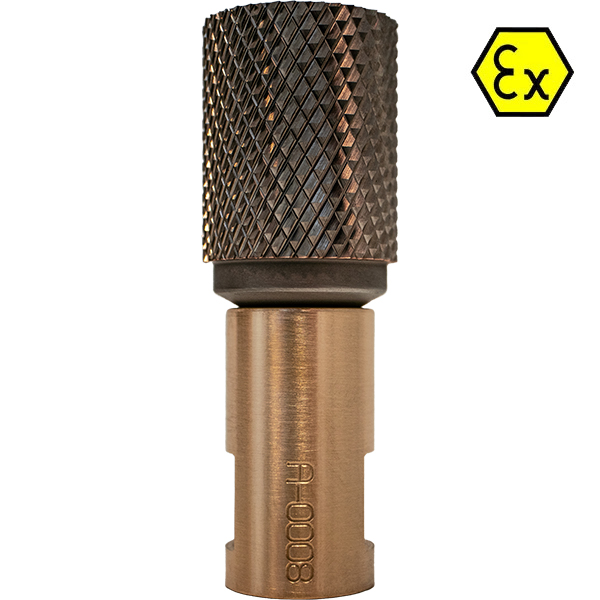
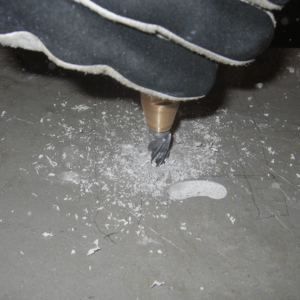
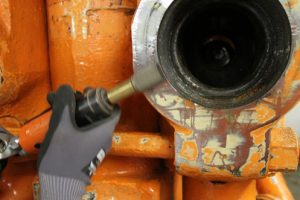
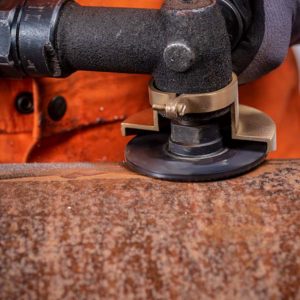
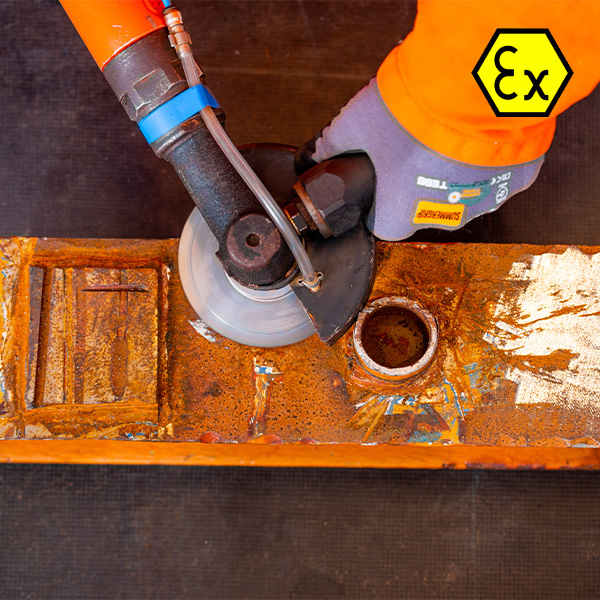
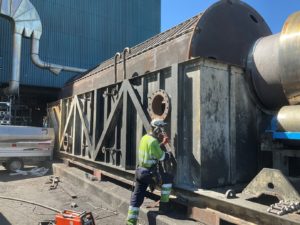
A practical option for accessible plate edges and external transitions. The hero photograph shows Big Papa working on a steel edge. Select a shape that reaches the material to be removed.
All three files are compatible with the A-0107 straight grinder and A-0104 angle grinder. Select the air tool and working position for the clearance and approach. We assemble the air tool, file and accessories as a complete setup. The grinding system does not require water cooling.
Need several file shapes in one set? The A-0049 Surface Solution Small includes Bow Cone and Straight Cone. The A-0054 All Around Solution provides a wider selection and also includes Big Papa. Select the set for the tasks your team will carry out.
Mark the edge length to prepare. Establish whether the task is deburring, edge breaking or specified rounding, and secure the workpiece.
Select the file for the clearance and contour. Guide it steadily and adjust the approach at corners, openings and welded details.
Look for remaining burrs and sharp areas. Measure the radius where specified and remove loose particles before the next operation.
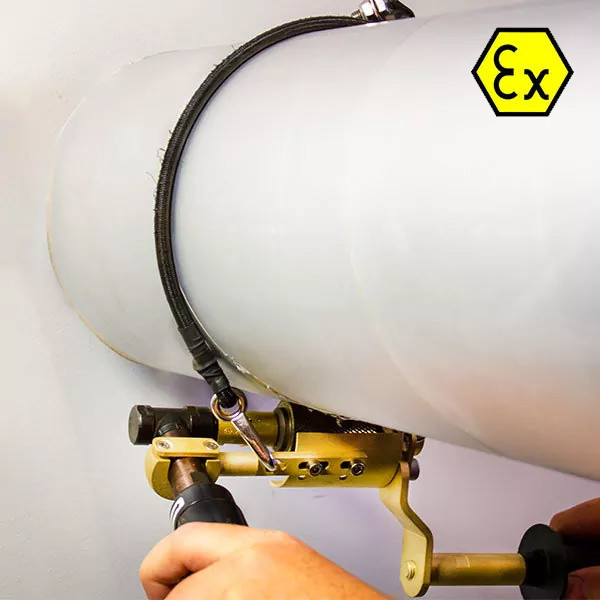
The grinding tools are covered by DNV 25 ATEX 78565X, Issue 1, marked II 2G Ex h IIA T3 Gb for gas zones 1 and 2. Carbon steel and stainless steel 304/316 are included in the material scope. We supply the correct combination of air tool, file and system equipment and review its use with the team.
Deburring removes a projecting burr or sliver, for example after cutting or drilling. Rounding creates a curved transition along the relevant edge length. A deburred part may therefore need further work when the job specifies a particular radius.
Select the radius from the drawing or coating specification for the part. The requirement can vary with application and coating system. If a radius is specified, we use it to plan the demonstration and tool selection.
The grinding system does not require water cooling. A-0002, A-0003 and A-0008 are used with their compatible air tools for dry mechanical preparation of steel edges.
Look for remaining burrs and sharp areas on both sides of the cut and around corners. Check a specified radius with a suitable radius gauge or other agreed measuring tool. Assess the entire edge length included in the task.
Yes. Rental is available in Norway. Send photographs, edge length, material thickness and the required rental period. We assemble air tools, file shapes and accessories for the task and review their use with you.